



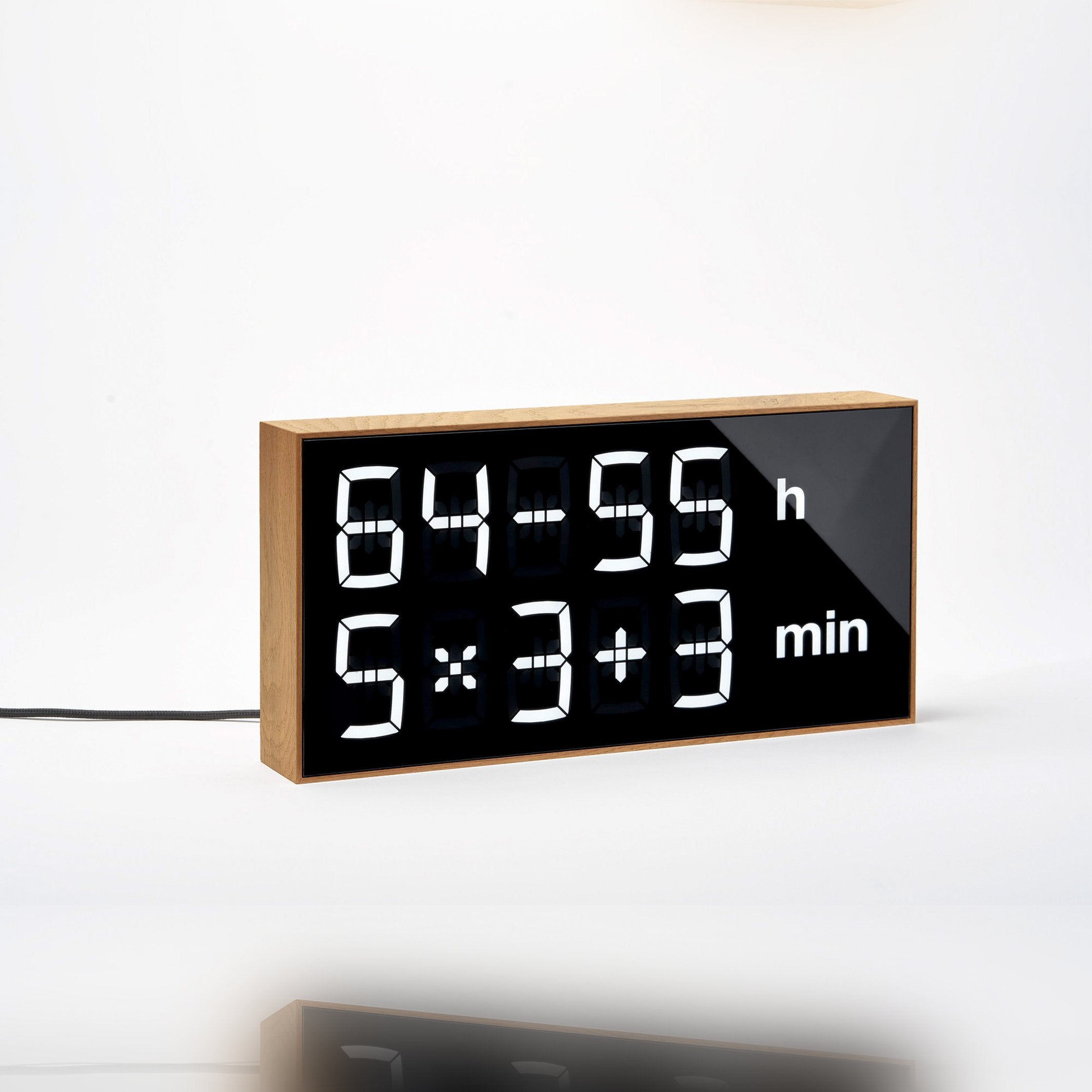
Math Clock "Albert Clock" Original – Wood · 33 cm | Albert Clock
VAT included. Shipping calculated at checkout

Care
Shipping & Returns
Germany - free shipping from 75 € order value
If you order our design products by 2 p.m., you will usually receive them within 1-2 working days.
All later orders on working days, which only contain products that can be delivered immediately, will be dispatched on the following working day
Europe
Products that can be delivered immediately will usually be with you within 4-6 working days.
How is my order shipped?
Your order will be shipped via our partners DHL & UPS within Germany and the EU.
How much are the shipping costs?
Within Germany, many orders are shipped free of charge. We charge a flat rate of €5.90 for the shipping of your order within Germany and shipping is free for you from an order value of €75.
The free shipping offer applies to standard shipping. The value of the goods after a possible return is decisive. If the value of the goods falls below €75 as a result of exercising your right of withdrawal, the shipping postage of €5.95 will be charged and offset against your refund for the return.
Bulky goods shipping costs of €19.95 may apply for individual items that exceed the standard package size. These will be calculated at check-out.
Shipping to most EU countries costs a flat rate of €9.90. All shipping details
How can I return products?
You can return ordered products up to 30 days after receipt of your order. More information
If you would like to return an item, send us an email to orders@charlesandmarie.com with the order number and information about which products you would like to return. Please pay for the return shipping - this of course does not apply to justified complaints.
A different delivery time is displayed
If a product can only be pre-ordered or is not in stock, it cannot be delivered immediately. In this case, you can find the deviating delivery time on the product page. As soon as we have the product available and dispatched again, you will receive it within the delivery times stated above.
Product compliance & safety
Manufacturer information & person responsible for product safety in the EU:
Description
ALBERT CLOCK · Axel Schindlbeck
What time is it? Work it out.
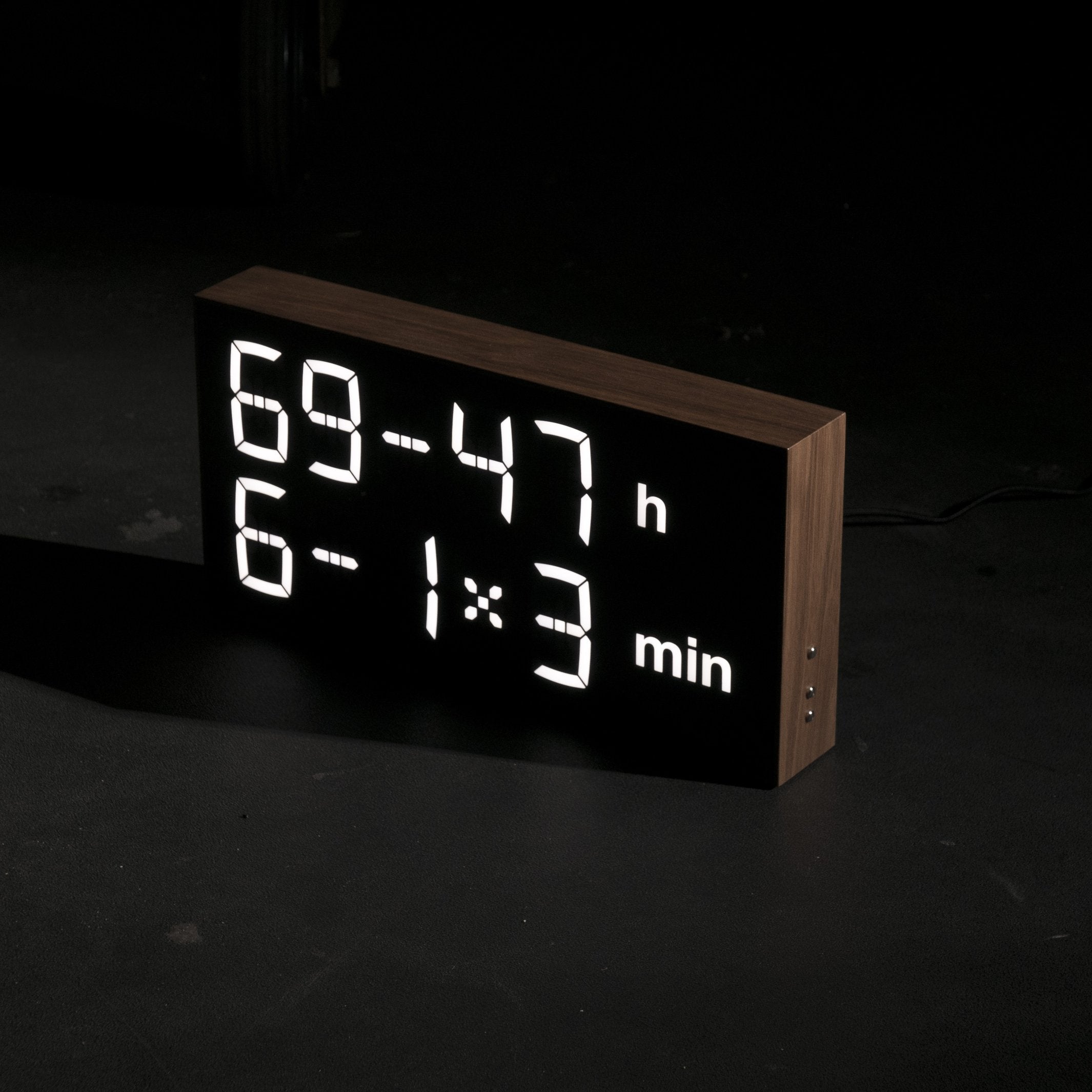
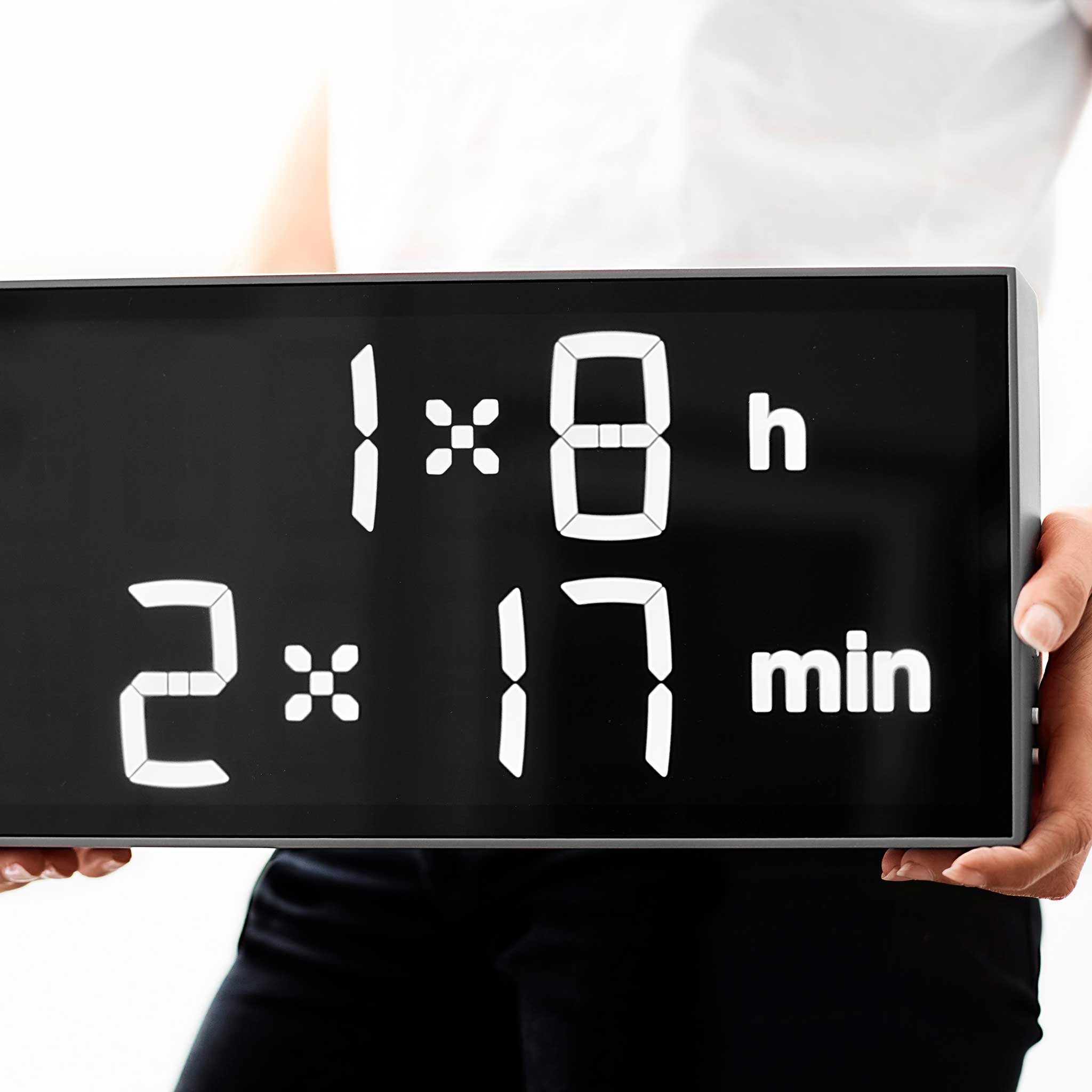
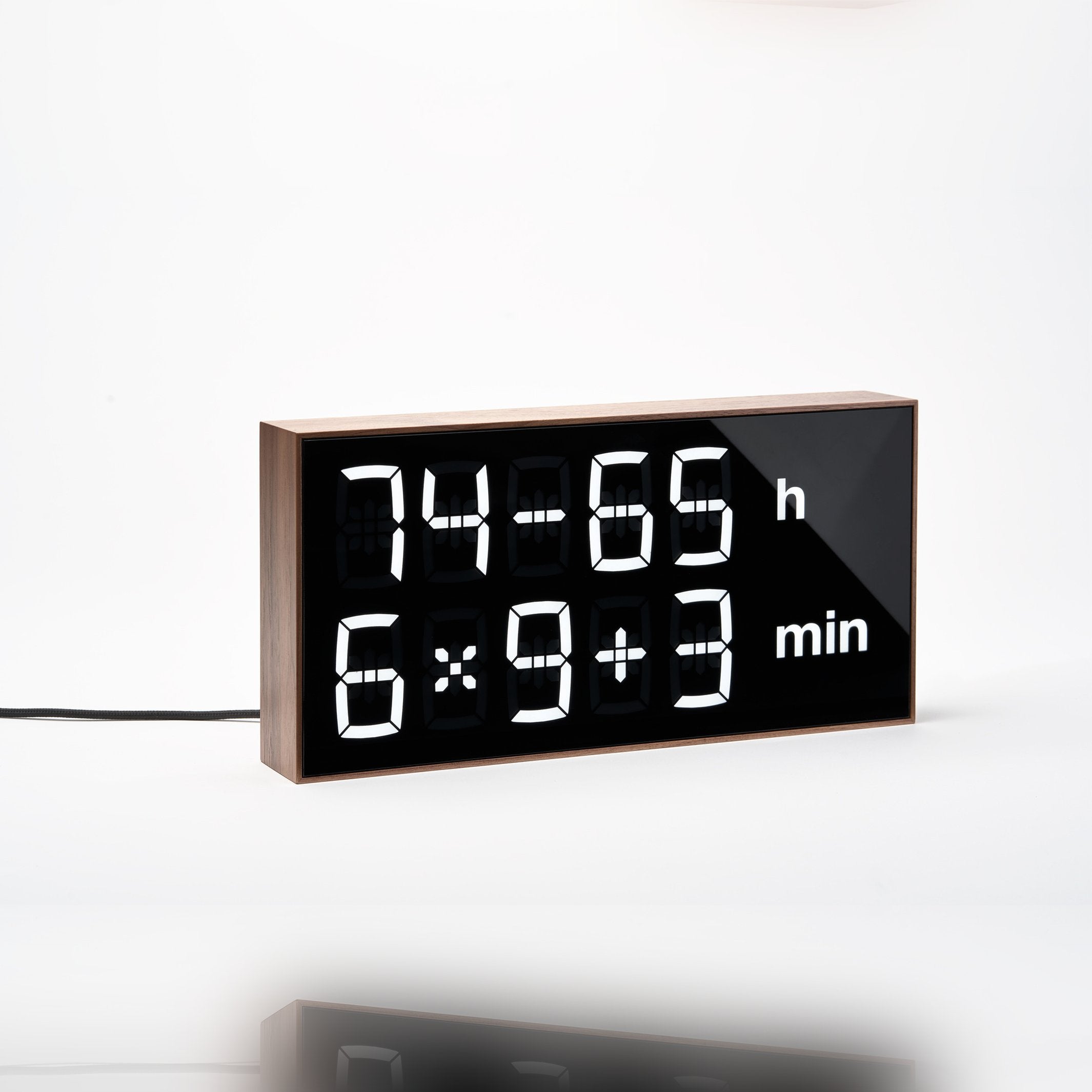
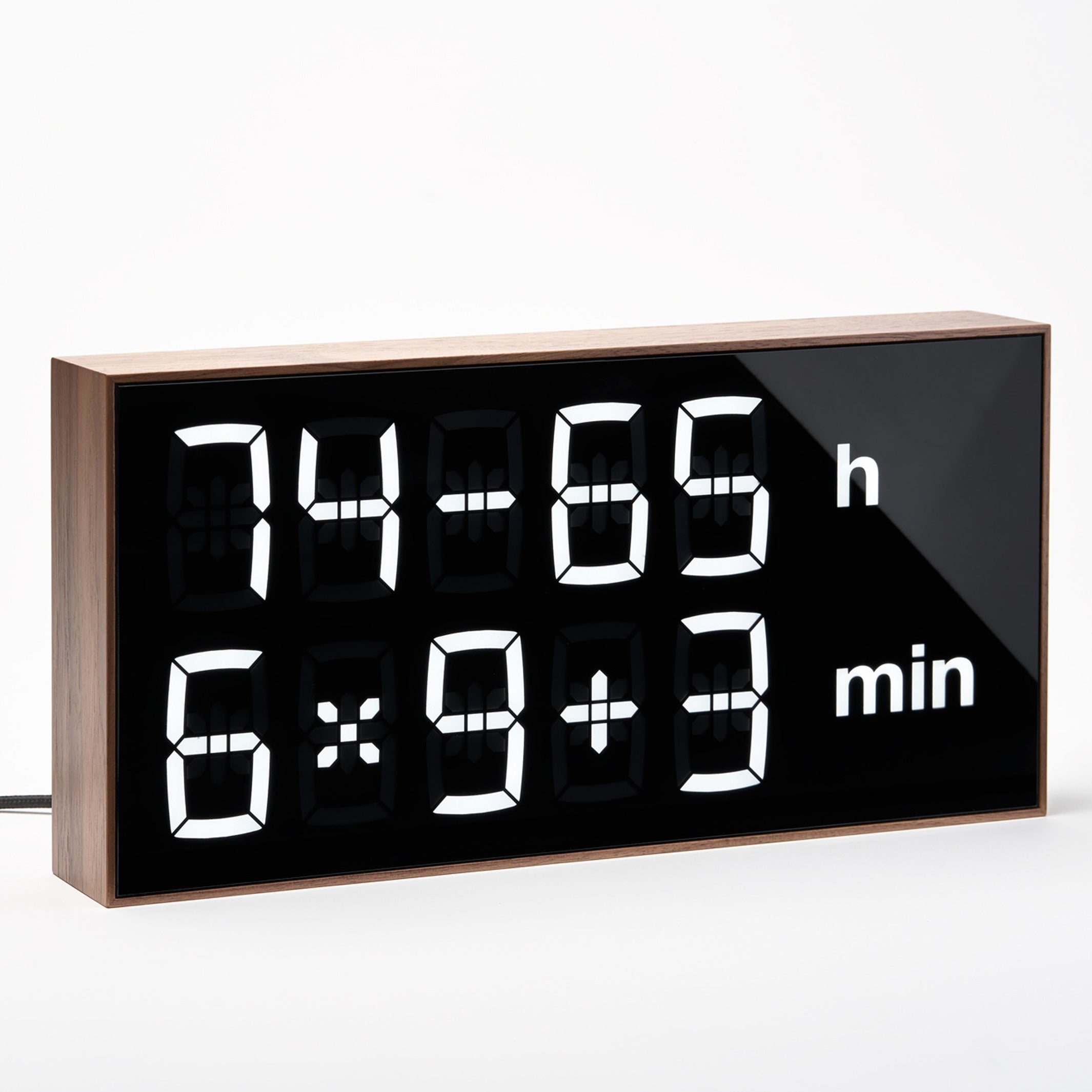
The Albert Clock Wood does not show the time — it makes you calculate it. Designed by Axel Schindlbeck as a graduation project at the Stuttgart Academy of Art, handcrafted by the family workshop Zimmermann Uhrengehäuse GmbH in Bavaria, Germany, and sold at the MoMA Design Store New York: this LED wall and desk clock replaces digits with math equations, turning every glance into an involuntary mental workout. Named after Albert Einstein, launched via Kickstarter in 2015 with €75,000 raised in under one month against a €23,000 goal, and now present in 10,000+ homes across 37+ countries — including the permanent collection of the Museum of the Future in Dubai.
DETAILS
| Dimensions | 33 × 17 × 5 cm |
| Weight | 2.2 kg |
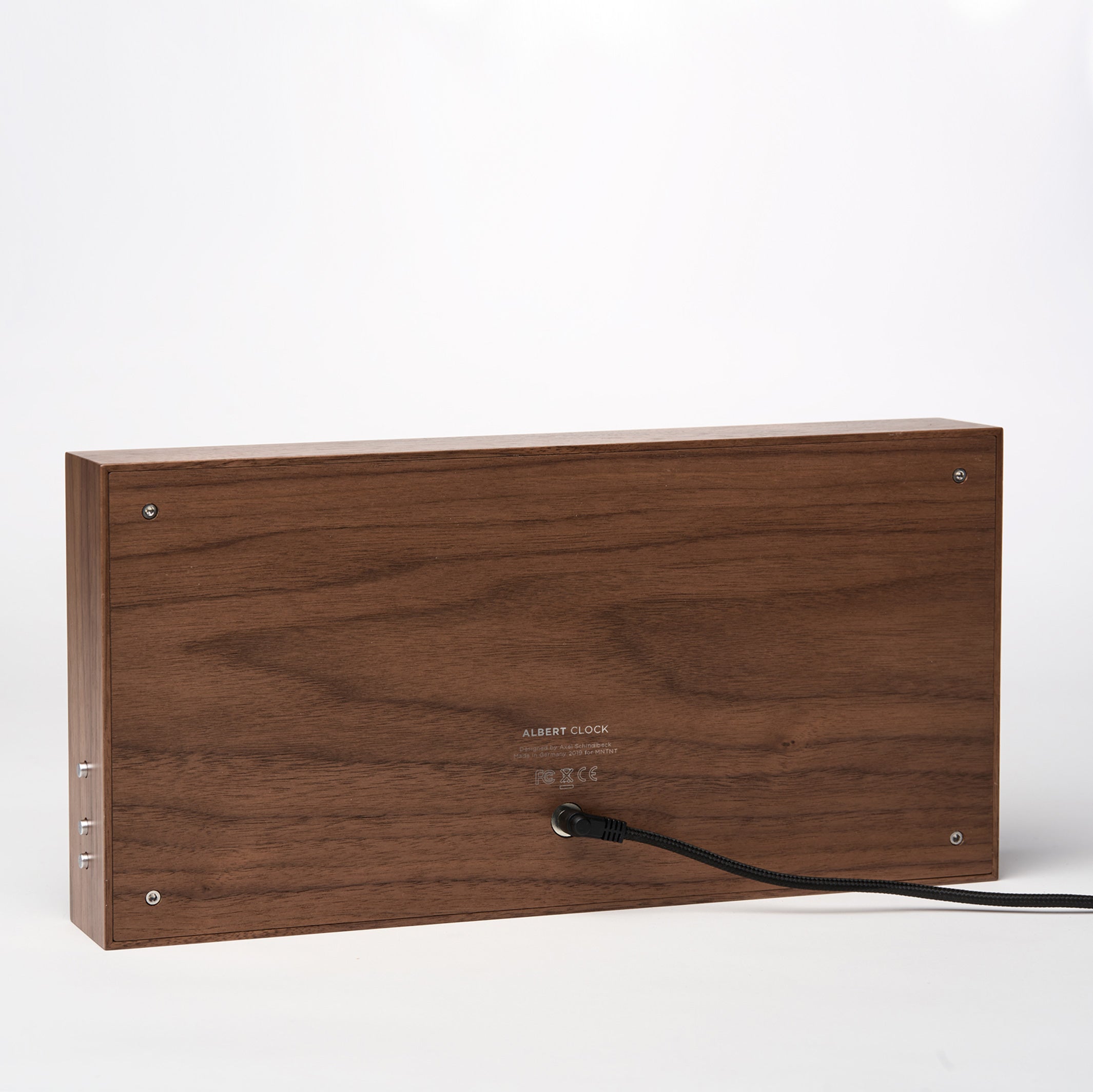
| Housing | Oiled solid wood (Walnut or Oak), MDF, acrylic |
| Display | 15-segment LED (Osram), readable in direct sunlight |
| Power | 110V/220V universal power supply (mains only, no battery) |
| Cable | 3 m, black nylon braided |
| Scope of delivery | Clock, 3 m cable, wall mounting system, EU & US plug adapters |
| Origin | Zimmermann Uhrengehäuse GmbH, Bavaria, Germany |
| Time display | 12h / 24h selectable |
| Levels | 6 difficulty · 6 speed · 6 brightness |
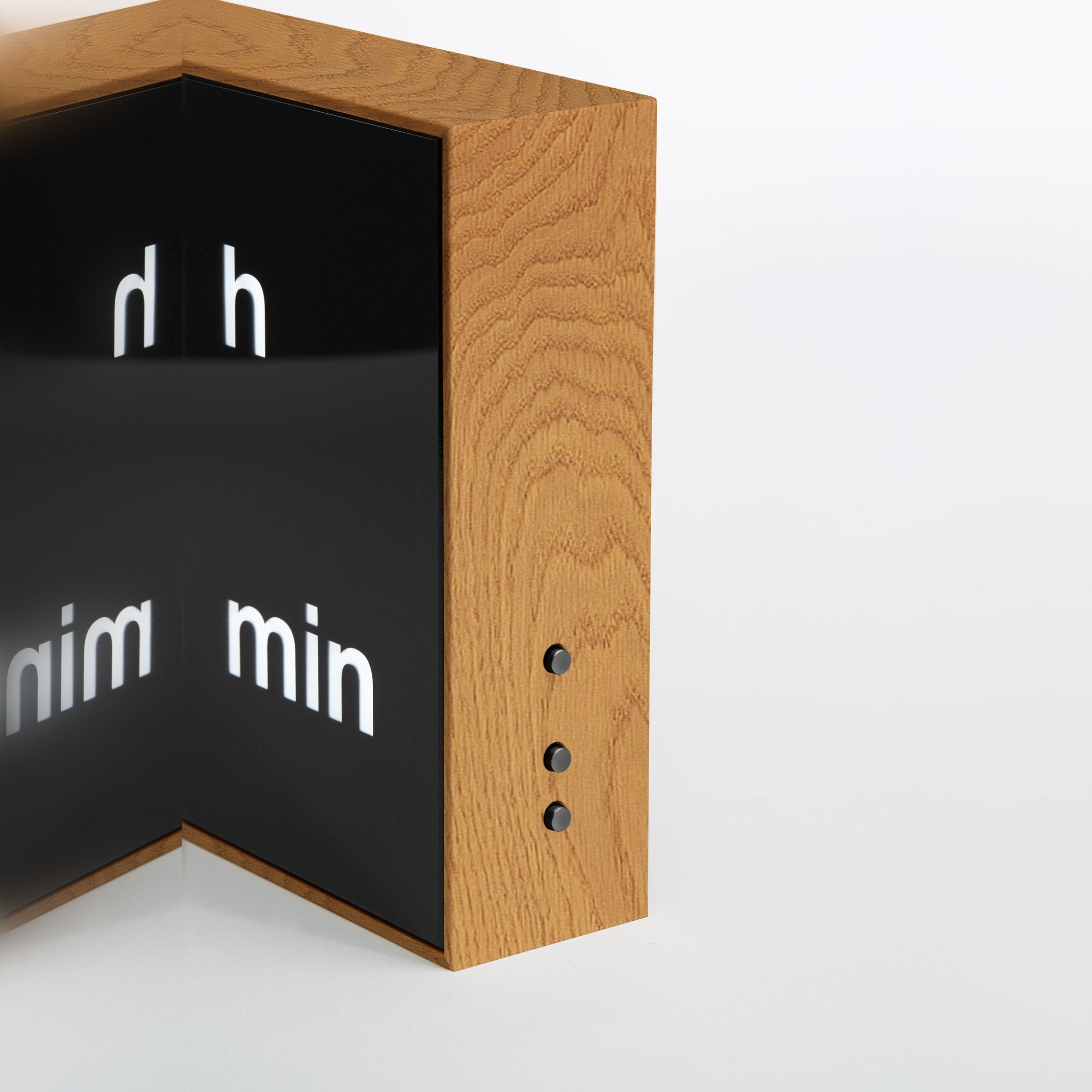
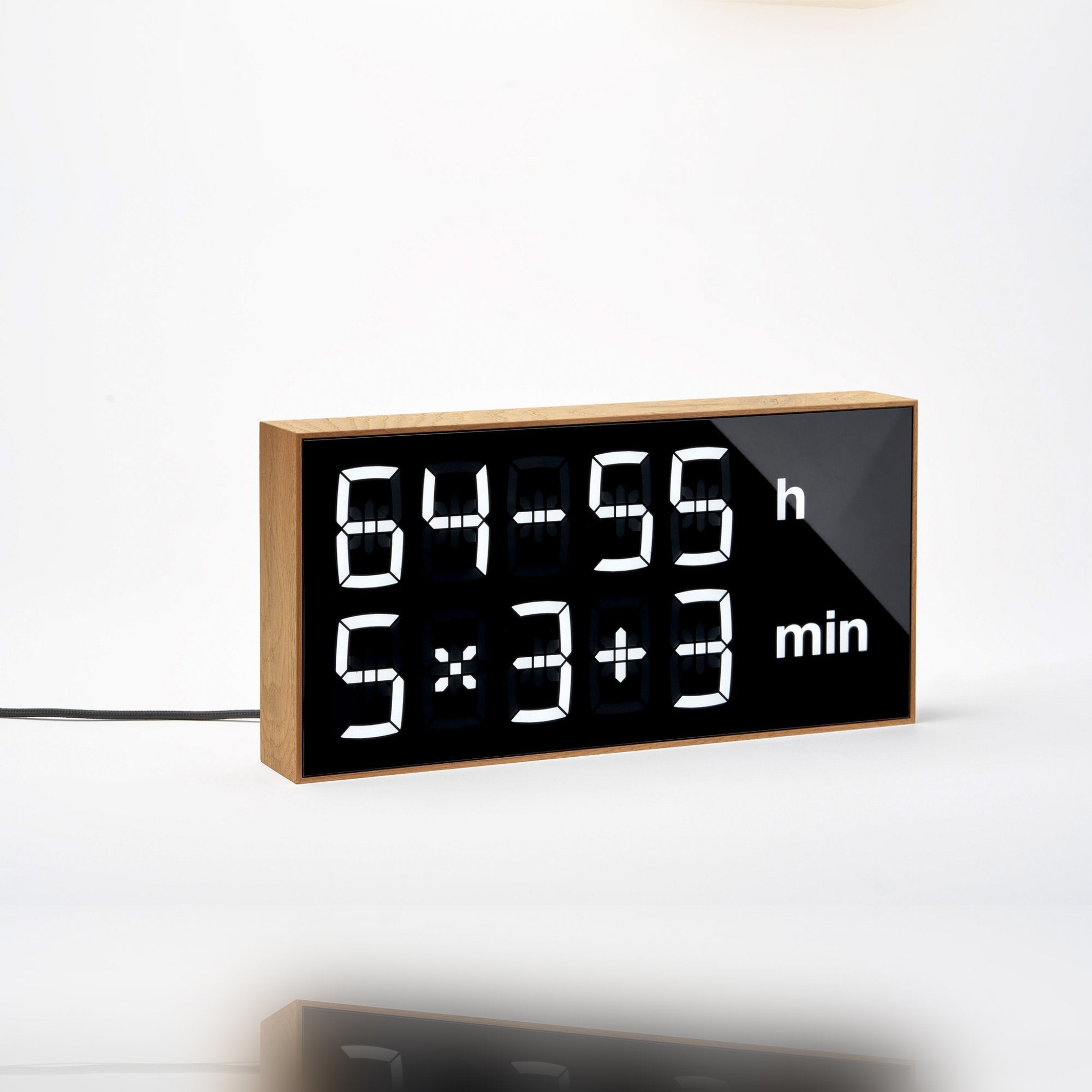
The Wood edition is available in two variants: Walnut — dark, warm, and visually commanding — and Oak — lighter, open-grained, and quietly Scandinavian. Both are finished with oil rather than lacquer, which keeps the wood grain alive and allows the surface to develop a natural patina over time.
“Elegant to look at, a clever everyday novelty, exceptionally well-made.” — Euronics. “The stark difference from cheap plastic gadgets out of China is immediately apparent.” — Euronics. “This clock (supposedly made for kids) cracks me up.” — Boing Boing.
QUESTIONS & ANSWERS
Can I use the Albert Clock without solving any math?
Yes. Level 0 displays normal time — just the hour and minute as numbers, no equation required. From there, six difficulty settings take you from simple addition and subtraction all the way to combined multiplication and division. The clock adapts to you: start at level 0 and move up whenever it feels right.
Walnut or Oak — which wood should I choose?
Both are oiled solid wood, handcrafted at Zimmermann Uhrengehäuse GmbH in Bavaria. Walnut is darker and richer — it commands a wall and pairs well with leather, brass, and warm-toned interiors. Oak is lighter and more neutral — it integrates into Scandinavian, Japandi, and bright modern settings without demanding attention. If in doubt: Walnut makes a stronger visual statement; Oak fits almost any room.
From what age does the Albert Clock make sense?
At levels 1–2, with simple addition and subtraction, it works well from around age 6 or 7. Boing Boing called it “supposedly made for kids” — but adults consistently report using it as a daily mental sharpener without it ever feeling like exercise. The no-repeat algorithm ensures every equation is uniquely generated, so it stays genuinely unpredictable at any age.
Is the Albert Clock a good gift for someone who doesn’t like math?
Possibly the best one. At level 0 it is simply a beautifully made wooden clock. At level 1 it is low-key and pleasant. The clever part is what happens after a few days: people who “don’t do math” find themselves solving equations instinctively before they have time to object. One user put it perfectly: “It constantly tempts me to master small challenges.” The clock teaches without announcing that it is teaching.
Does the Albert Clock run on batteries?
No. The Albert Clock runs exclusively on mains power. A 3 m black nylon braided cable and a 110V/220V universal power supply are included, together with EU and US plug adapters. The cable gives solid reach, but you will need a socket within range of your chosen wall or shelf position. There is no battery mode.
Can the Albert Clock Wood be used as both a wall clock and a desk clock?
Yes. The clock includes a wall mounting system and also stands freely on a desk or shelf without additional accessories. At 33 × 17 × 5 cm, it fits comfortably on most surfaces without dominating them. The 3 m cable gives you flexibility in either configuration.
How does the difficulty and speed system work?
Six difficulty levels control the complexity of the equation: Level 0 shows normal time; levels 1–2 use addition and subtraction; levels 3–4 add multiplication and division; levels 5–6 combine multiple operations. Separately, six speed levels set how frequently the equation refreshes per minute — slower speeds give more time to solve before the display moves on. Six brightness levels plus an automatic day/night mode complete the control set.
Where is the Albert Clock Wood made?
The oiled wood housing is handcrafted by Zimmermann Uhrengehäuse GmbH, a family-owned workshop in Bavaria, Germany. The electronics and software were developed by Axel Schindlbeck and Fred Mauclere; the company behind the product is MNTNT, based in Paris, founded in 2014. Euronics reviewers noticed it immediately: “The team placed great value on handcraftsmanship — which explains and justifies the price.”
The Albert Clock Wood. For the wall of someone who likes to think — or for anyone ready to start. Curated by Charles & Marie.
Can I use the Albert Clock without solving any math?
Yes. Level 0 displays normal time — just the hour and minute as numbers, no equation required. From there, six difficulty settings take you from simple addition and subtraction all the way to combined multiplication and division. The clock adapts to you: start at level 0 and move up whenever it feels right.
Walnut or Oak — which wood should I choose?
Both are oiled solid wood, handcrafted at Zimmermann Uhrengehäuse GmbH in Bavaria. Walnut is darker and richer — it commands a wall and pairs well with leather, brass, and warm-toned interiors. Oak is lighter and more neutral — it integrates into Scandinavian, Japandi, and bright modern settings without demanding attention. If in doubt: Walnut makes a stronger visual statement; Oak fits almost any room.
From what age does the Albert Clock make sense?
At levels 1–2, with simple addition and subtraction, it works well from around age 6 or 7. Boing Boing called it “supposedly made for kids” — but adults consistently report using it as a daily mental sharpener without it ever feeling like exercise. The no-repeat algorithm ensures every equation is uniquely generated, so it stays genuinely unpredictable at any age.
Is the Albert Clock a good gift for someone who doesn’t like math?
Possibly the best one. At level 0 it is simply a beautifully made wooden clock. At level 1 it is low-key and pleasant. The clever part is what happens after a few days: people who “don’t do math” find themselves solving equations instinctively before they have time to object. One user put it perfectly: “It constantly tempts me to master small challenges.” The clock teaches without announcing that it is teaching.
Does the Albert Clock run on batteries?
No. The Albert Clock runs exclusively on mains power. A 3 m black nylon braided cable and a 110V/220V universal power supply are included, together with EU and US plug adapters. The cable gives solid reach, but you will need a socket within range of your chosen wall or shelf position. There is no battery mode.
Can the Albert Clock Wood be used as both a wall clock and a desk clock?
Yes. The clock includes a wall mounting system and also stands freely on a desk or shelf without additional accessories. At 33 × 17 × 5 cm, it fits comfortably on most surfaces without dominating them. The 3 m cable gives you flexibility in either configuration.
How does the difficulty and speed system work?
Six difficulty levels control the complexity of the equation: Level 0 shows normal time; levels 1–2 use addition and subtraction; levels 3–4 add multiplication and division; levels 5–6 combine multiple operations. Separately, six speed levels set how frequently the equation refreshes per minute — slower speeds give more time to solve before the display moves on. Six brightness levels plus an automatic day/night mode complete the control set.
Where is the Albert Clock Wood made?
The oiled wood housing is handcrafted by Zimmermann Uhrengehäuse GmbH, a family-owned workshop in Bavaria, Germany. The electronics and software were developed by Axel Schindlbeck and Fred Mauclere; the company behind the product is MNTNT, based in Paris, founded in 2014. Euronics reviewers noticed it immediately: “The team placed great value on handcraftsmanship — which explains and justifies the price.”
This product has no reviews yet.
Recommendations & Alternatives
This product has no reviews yet.