


Construction Toy "House of Mondrian" – Wood · Metal | Beamalevich
VAT included. Shipping calculated at checkout

Important note
Care
Shipping & Returns
Germany - free shipping from 75 € order value
If you order our design products by 2 p.m., you will usually receive them within 1-2 working days.
All later orders on working days, which only contain products that can be delivered immediately, will be dispatched on the following working day
Europe
Products that can be delivered immediately will usually be with you within 4-6 working days.
How is my order shipped?
Your order will be shipped via our partners DHL & UPS within Germany and the EU.
How much are the shipping costs?
Within Germany, many orders are shipped free of charge. We charge a flat rate of €5.90 for the shipping of your order within Germany and shipping is free for you from an order value of €75.
The free shipping offer applies to standard shipping. The value of the goods after a possible return is decisive. If the value of the goods falls below €75 as a result of exercising your right of withdrawal, the shipping postage of €5.95 will be charged and offset against your refund for the return.
Bulky goods shipping costs of €19.95 may apply for individual items that exceed the standard package size. These will be calculated at check-out.
Shipping to most EU countries costs a flat rate of €9.90. All shipping details
How can I return products?
You can return ordered products up to 30 days after receipt of your order. More information
If you would like to return an item, send us an email to orders@charlesandmarie.com with the order number and information about which products you would like to return. Please pay for the return shipping - this of course does not apply to justified complaints.
A different delivery time is displayed
If a product can only be pre-ordered or is not in stock, it cannot be delivered immediately. In this case, you can find the deviating delivery time on the product page. As soon as we have the product available and dispatched again, you will receive it within the delivery times stated above.
Product compliance & safety
Manufacturer information & person responsible for product safety in the EU:
Description
BEAMALEVICH
Red. Blue. Yellow. Black grid. The construction set that brings Mondrian from the museum frame to your desk.
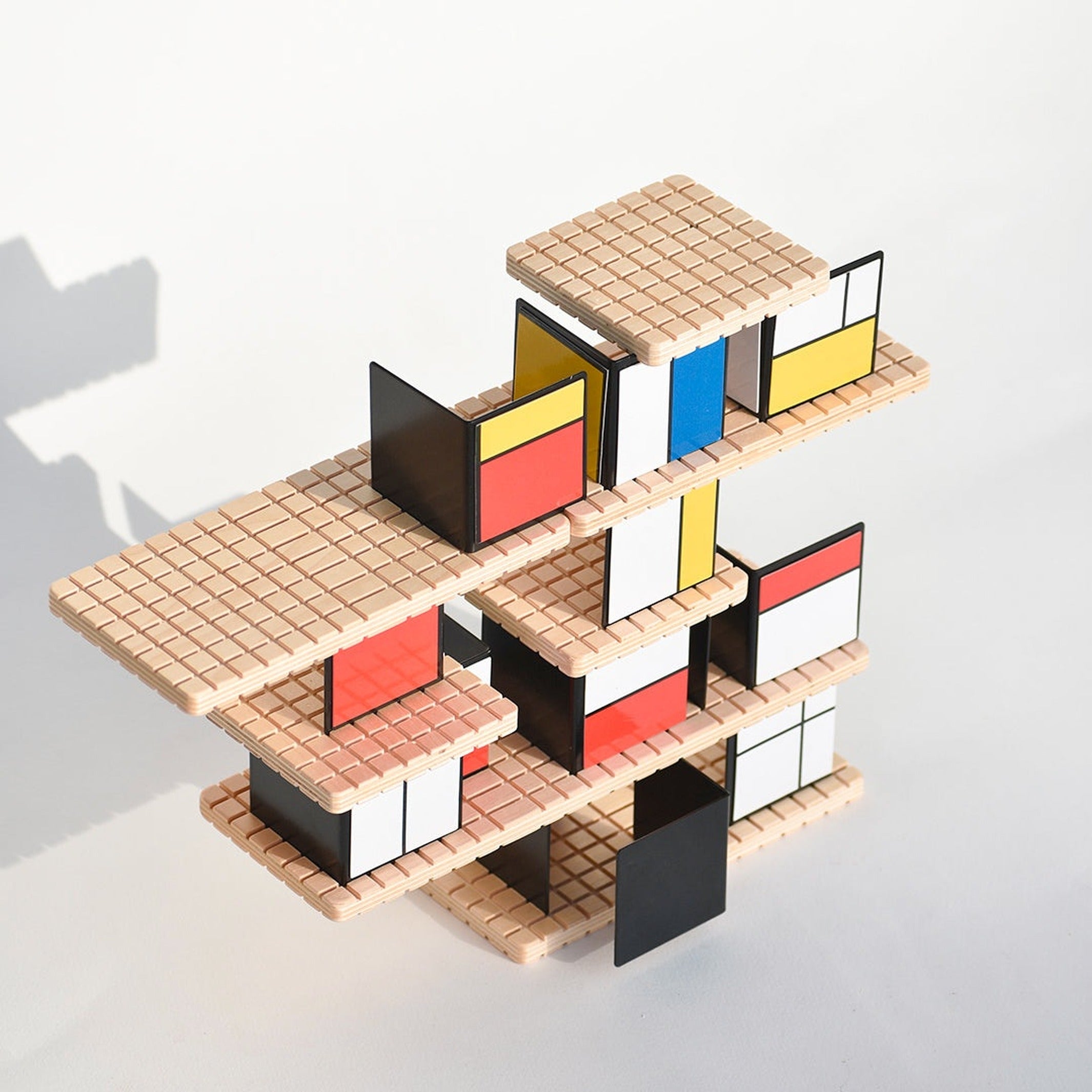
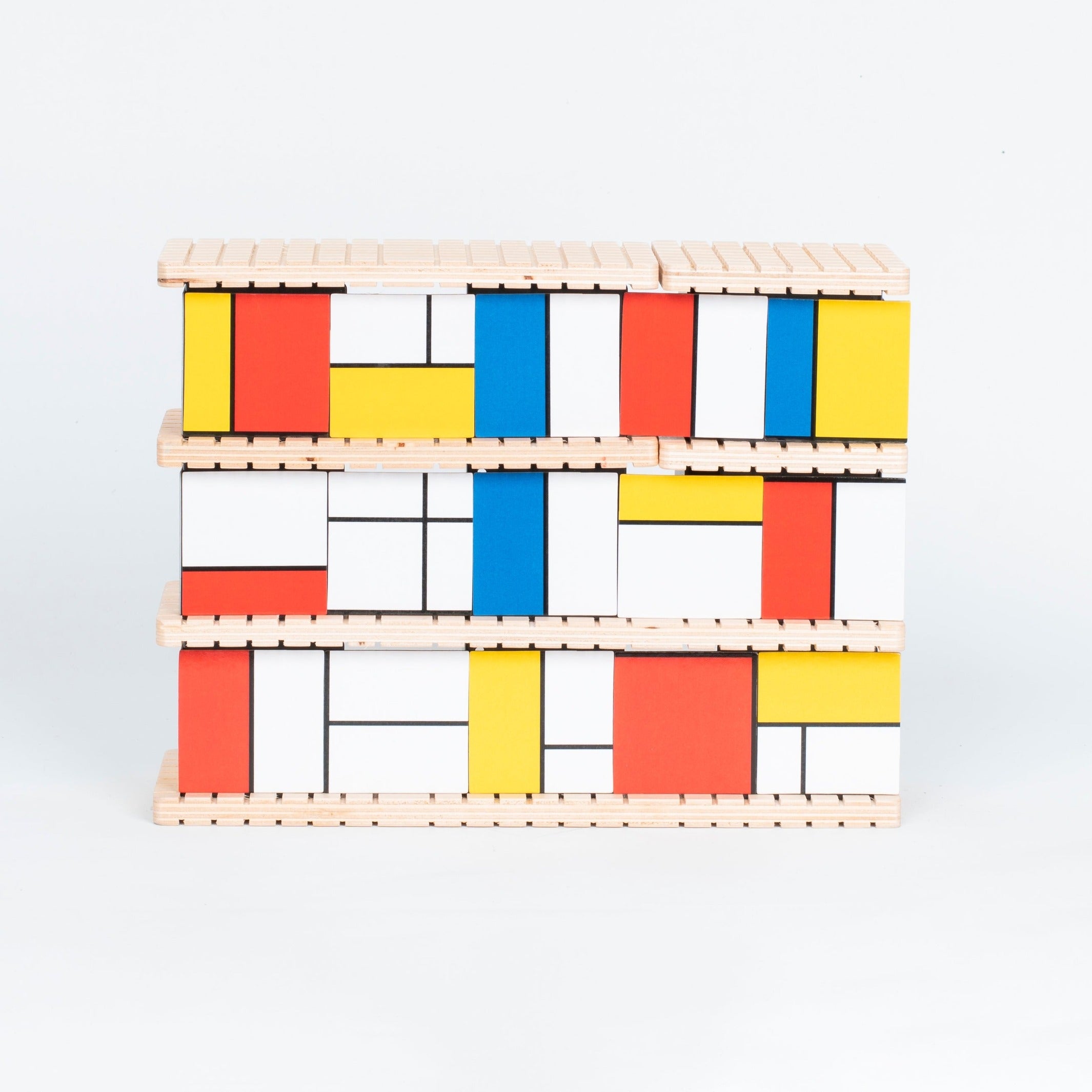
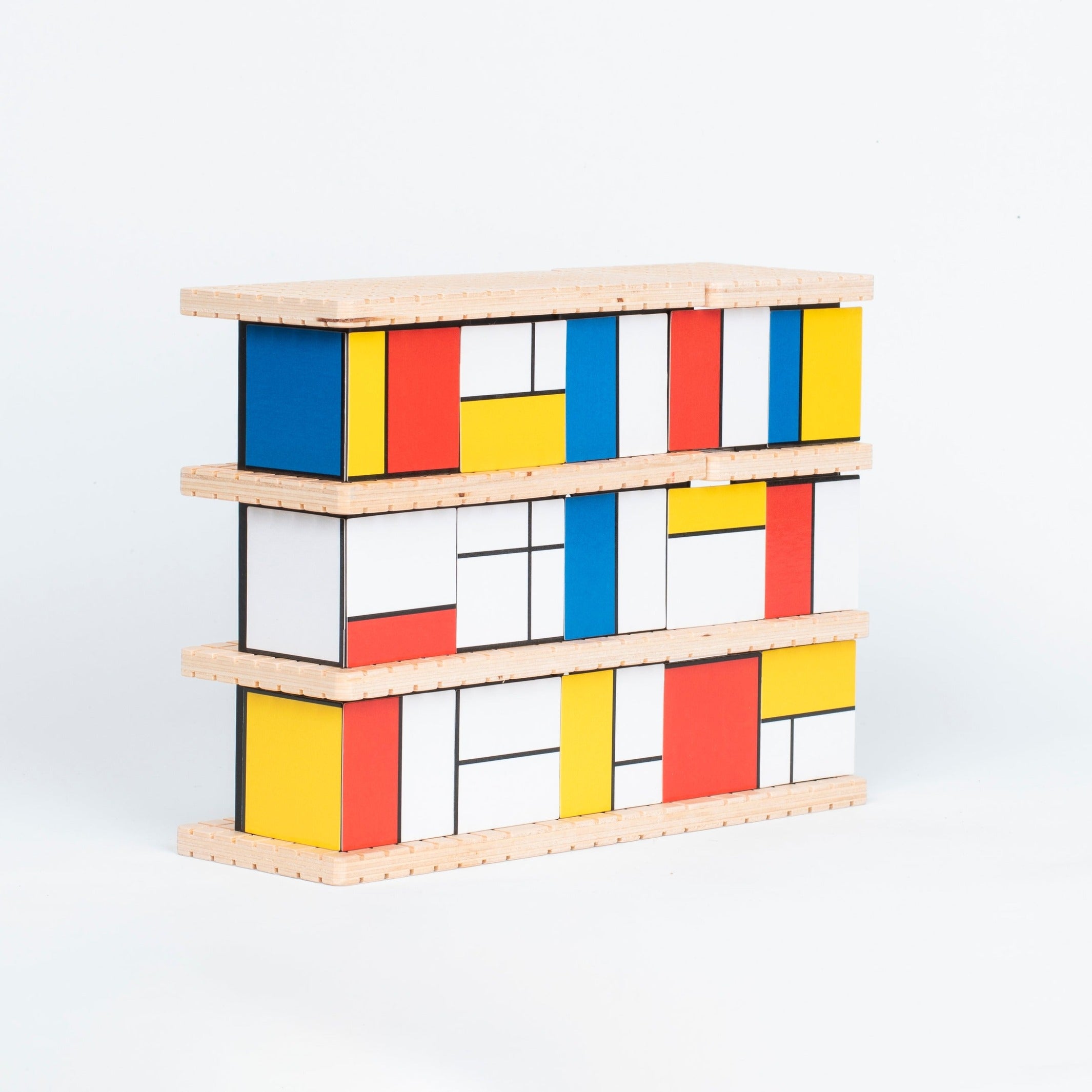
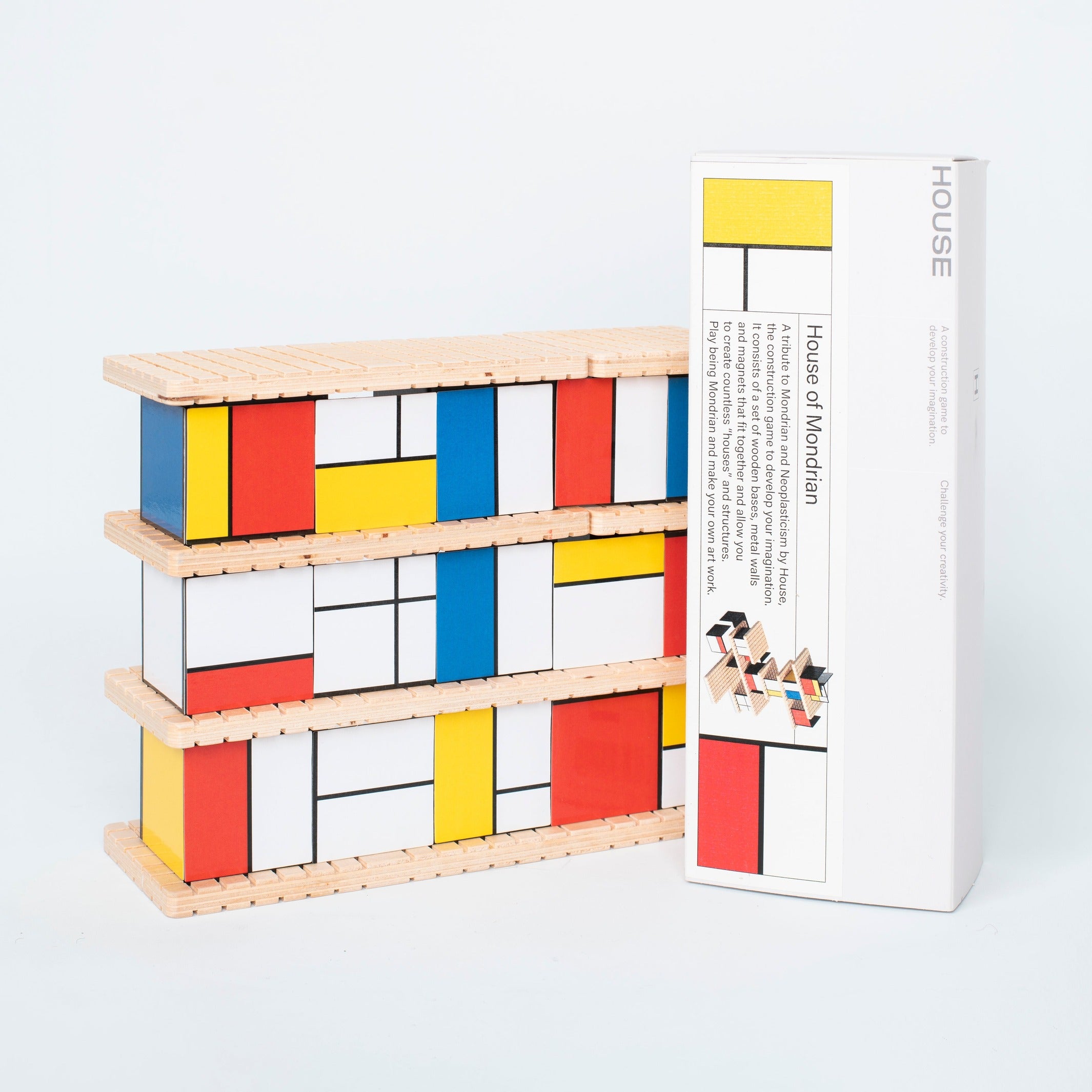
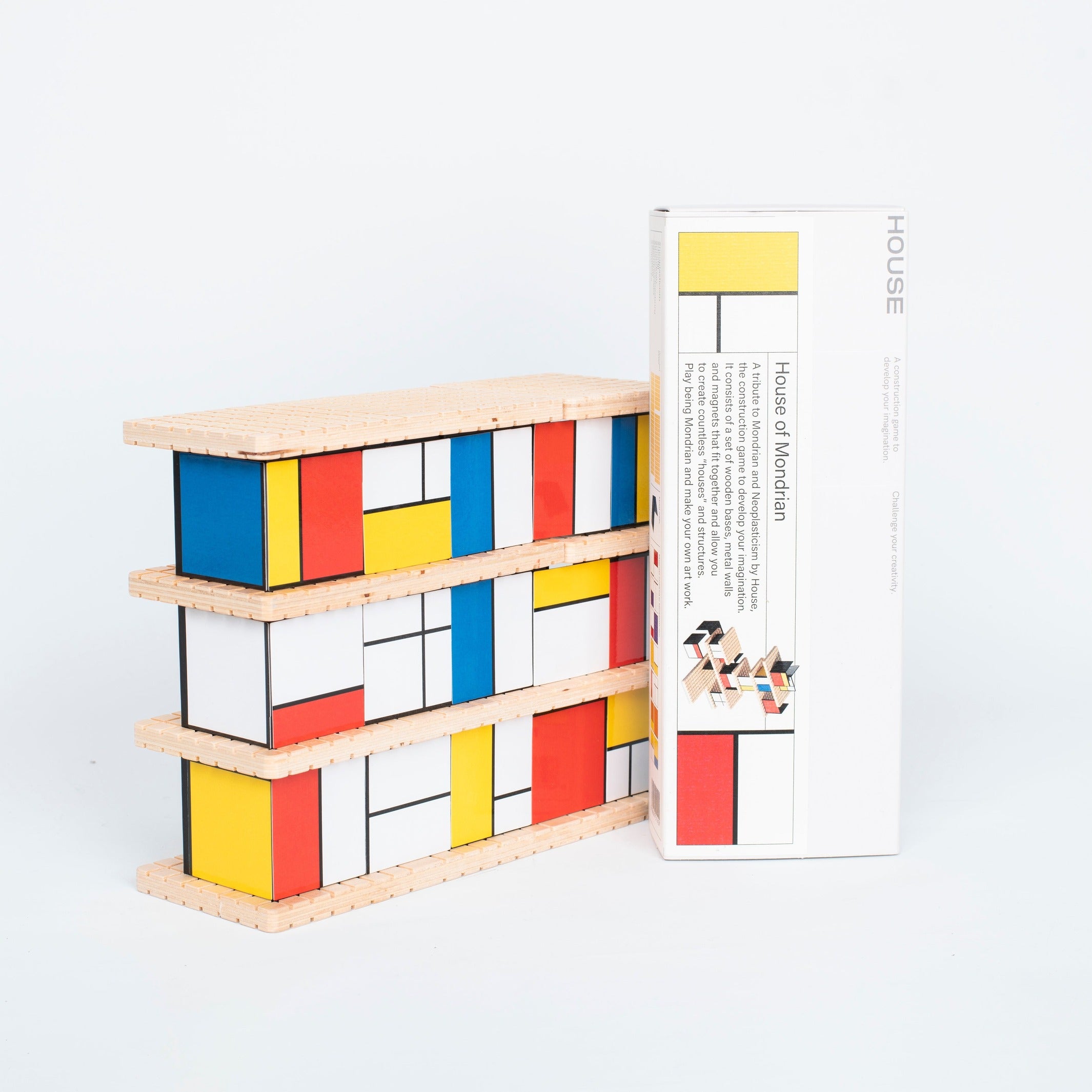
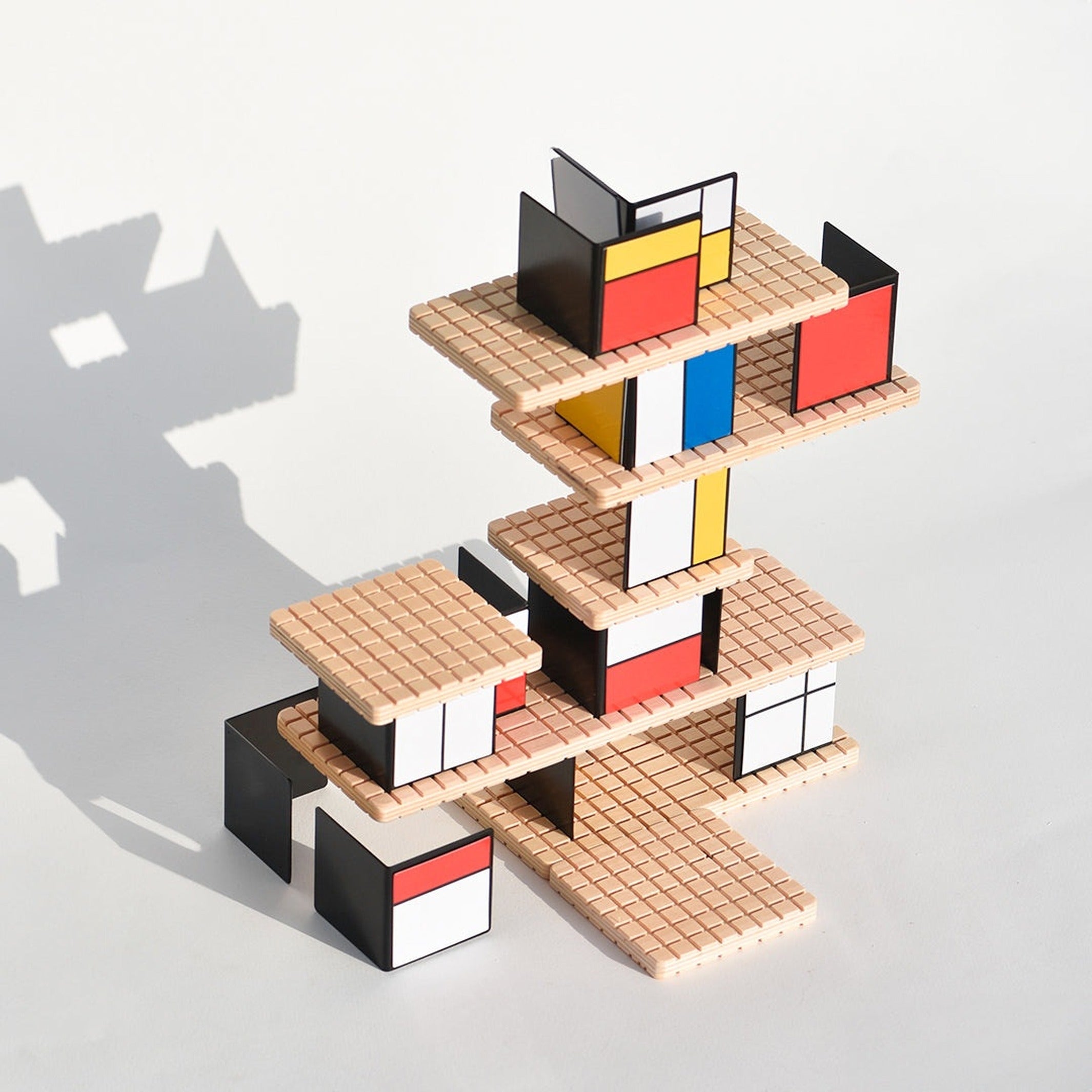
HOUSE Mondrian is not a toy. It’s a playable object — an architecture construction set by Beamalevich from Barcelona that translates the visual language of Piet Mondrian (born 1872 in Amersfoort, Netherlands — the co-founder of the De Stijl movement in Leiden, 1917, alongside Theo van Doesburg) into a three-dimensional, infinitely reconfigurable object. Wooden bases with guide rails, metal corner walls, and magnetic façade elements with Mondrian’s characteristic visual language — primary colours (red, blue, yellow), black grid lines, white fields — click and hold together without glue. Assemble it. Rearrange it. Put it on the shelf. A compact work of art that invites experimentation.
The gift for everyone who grew up with De Stijl — or is about to discover it
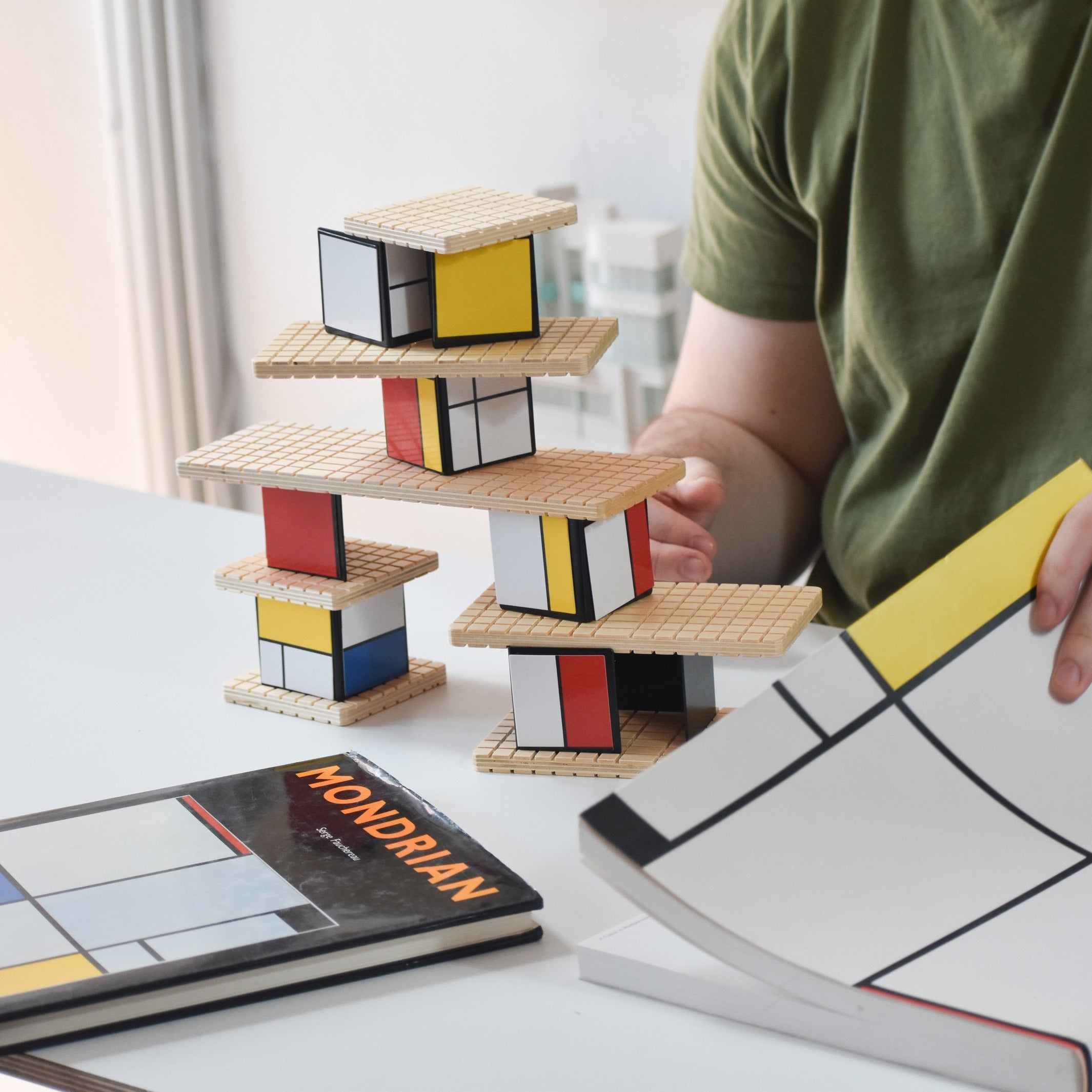
You’re looking for a gift for someone who loves architecture, design or art — and for whom a book isn’t enough? HOUSE Mondrian brings Piet Mondrian from the museum frame to the desk. Mondrian — trained at the Rijksakademie in Amsterdam, co-founder of De Stijl in Leiden in 1917 — developed with his Neoplasticism one of the most rigorous and influential visual languages of the 20th century: primary colours only, black and white only, horizontal and vertical lines only. This visual language — radically reduced, but never empty, geometrically precise, but always in tension — is embedded in every magnetic element of this set. Xavier Vidal, founder of Beamalevich in Barcelona and creator of the construction game Arquitecton, has built a set with HOUSE that changes every time you touch it.
How HOUSE Mondrian works
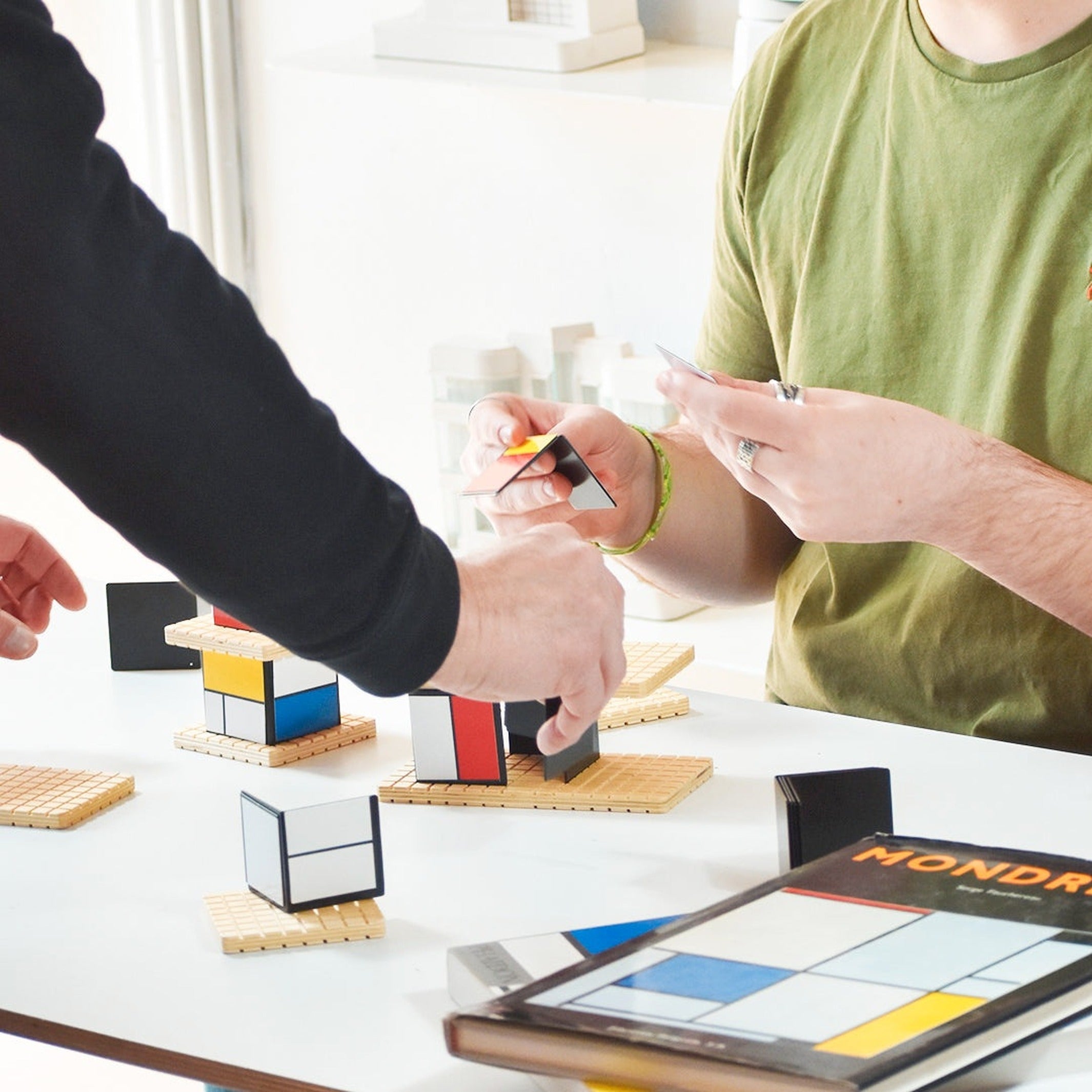
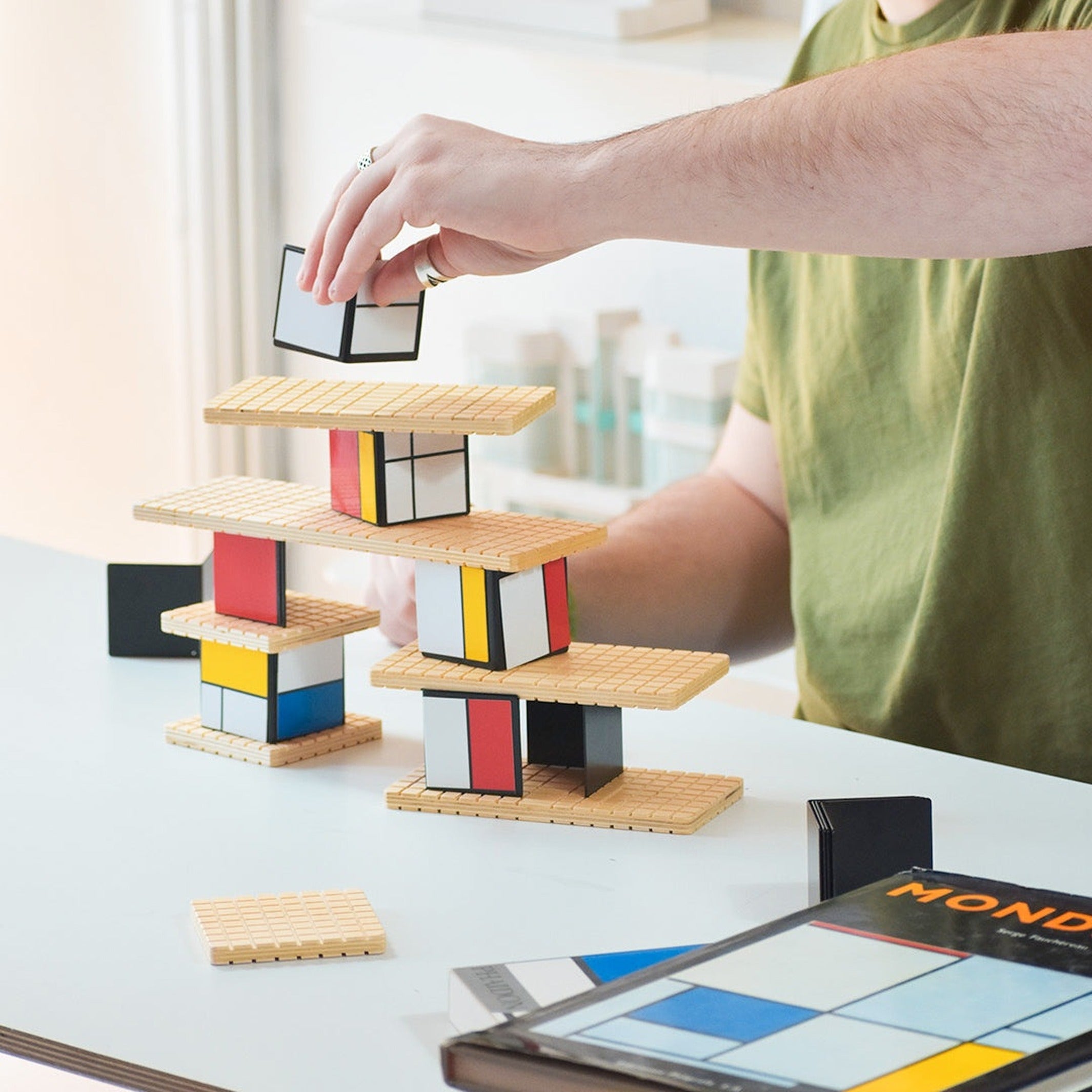
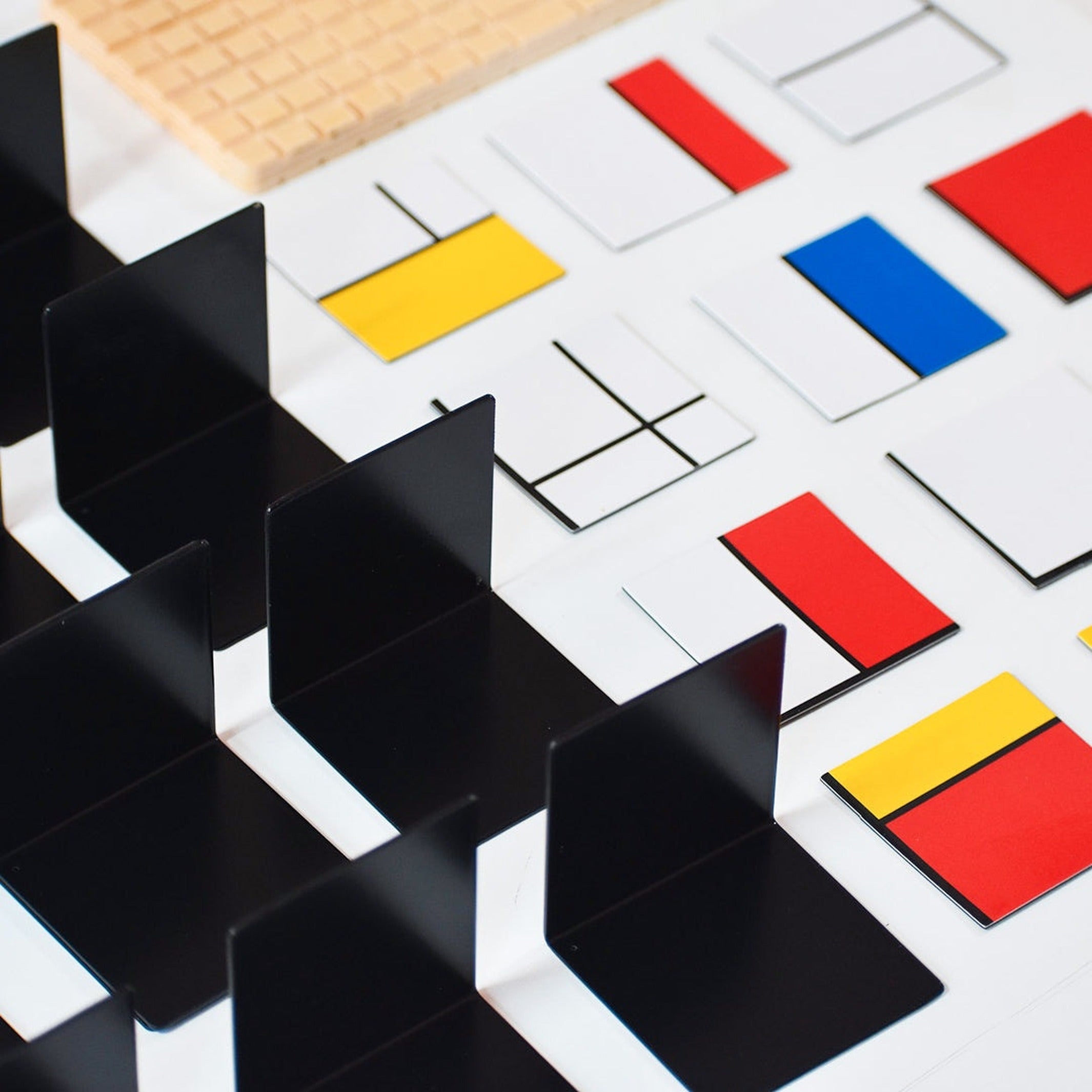
The wooden bases with guide rails are connected using 90° metal corner walls to form a building skeleton — no glue, no tools. The magnetic façade elements are then slid into the rails of the wooden pieces: Mondrian motifs with primary colours and black grid, transforming the raw skeleton into a design object. The elements hold magnetically and can be rearranged at any time. Includes a bonus set: a second pack of magnetic elements with alternative design inside the box. Packaging: 24.5 × 9.1 × 5.5 cm.
Product details
| Brand | Beamalevich |
| Concept | Xavier Vidal |
| Inspiration | Piet Mondrian (1872–1944) / De Stijl |
| Materials | Wood, metal, magnets |
| Contents | 5 wooden bases, 9 corner walls, 14 magnetic elements + bonus set |
| Packaging | 24.5 × 9.1 × 5.5 cm |
| Origin | Barcelona, Spain |
Frequently asked questions
What exactly is included in the set?
The set contains 3 large rectangular wooden bases with guide rails, 1 medium rectangular wooden base, 1 small square wooden base, 9 L-shaped metal corner walls, and 14 magnetic elements with Mondrian motifs (primary colours, black grid lines, white fields). Bonus: a second pack of magnetic elements with alternative design inside the box. No glue, no tools, no fixed assembly instructions — every configuration is valid.
Is this a children’s toy?
No — Beamalevich describes HOUSE explicitly as a “construction toy for serious people.” The set is designed for adults who want not just to look at architecture, design and art, but to touch it. The small components and the cultural context (Mondrian, De Stijl, Neoplasticism) make HOUSE an object for desks, shelves and sideboards — not children’s rooms.
Who is Piet Mondrian — and why is he the inspiration?
Piet Mondrian (1872, Amersfoort, Netherlands — 1944, New York) is, alongside Kandinsky and Malevich, one of the most important pioneers of abstract art. In 1917 he co-founded De Stijl with Theo van Doesburg in Leiden — a movement that reduced art to its essentials: primary colours, black, white, horizontal and vertical lines. His influence extends from the Bauhaus to the Rietveld Schröder House (Utrecht, 1924) and into every design that places a premium on reduction and clarity. That quality is embedded in every façade element of the HOUSE Mondrian set.
Can the assembled house be left on permanent display?
Yes — and that’s one of the set’s strengths. HOUSE Mondrian is designed as a permanent display piece that stands on a desk, shelf or sideboard. Since all elements connect magnetically or by sliding, the object can be redesigned at any time: different façades, different arrangement, different configuration. It is never finished — that is the intention.
Are there other HOUSE sets by Beamalevich?
Yes. Beamalevich has expanded the HOUSE series to include several iconic buildings and art movements: HOUSE Bauhaus Dessau (after Gropius), HOUSE Eames (after Ray & Charles Eames), HOUSE Unité d’Habitation (after Le Corbusier), HOUSE Malevich, HOUSE Op Art (after Vasarely) and HOUSE Metropolis. All follow the same principle: playable object, cultural reference, no glue.
HOUSE Mondrian — Beamalevich & Piet Mondrian. The object that is never finished.
What exactly is included in the set?
The set contains 3 large rectangular wooden bases with guide rails, 1 medium rectangular wooden base, 1 small square wooden base, 9 L-shaped metal corner walls, and 14 magnetic elements with Mondrian motifs (primary colours, black grid lines, white fields). Bonus: a second pack of magnetic elements with alternative design inside the box. No glue, no tools, no fixed assembly instructions — every configuration is valid.
Is this a children’s toy?
No — Beamalevich describes HOUSE explicitly as a “construction toy for serious people.” The set is designed for adults who want not just to look at architecture, design and art, but to touch it. The small components and the cultural context (Mondrian, De Stijl, Neoplasticism) make HOUSE an object for desks, shelves and sideboards — not children’s rooms.
Who is Piet Mondrian — and why is he the inspiration?
Piet Mondrian (1872, Amersfoort, Netherlands — 1944, New York) is, alongside Kandinsky and Malevich, one of the most important pioneers of abstract art. In 1917 he co-founded De Stijl with Theo van Doesburg in Leiden — a movement that reduced art to its essentials: primary colours, black, white, horizontal and vertical lines. His influence extends from the Bauhaus to the Rietveld Schröder House (Utrecht, 1924) and into every design that places a premium on reduction and clarity. That quality is embedded in every façade element of the HOUSE Mondrian set.
Can the assembled house be left on permanent display?
Yes — and that’s one of the set’s strengths. HOUSE Mondrian is designed as a permanent display piece that stands on a desk, shelf or sideboard. Since all elements connect magnetically or by sliding, the object can be redesigned at any time: different façades, different arrangement, different configuration. It is never finished — that is the intention.
Are there other HOUSE sets by Beamalevich?
Yes. Beamalevich has expanded the HOUSE series to include several iconic buildings and art movements: HOUSE Bauhaus Dessau (after Gropius), HOUSE Eames (after Ray & Charles Eames), HOUSE Unité d’Habitation (after Le Corbusier), HOUSE Malevich, HOUSE Op Art (after Vasarely) and HOUSE Metropolis. All follow the same principle: playable object, cultural reference, no glue.
This product has no reviews yet.
Recommendations & Alternatives
This product has no reviews yet.